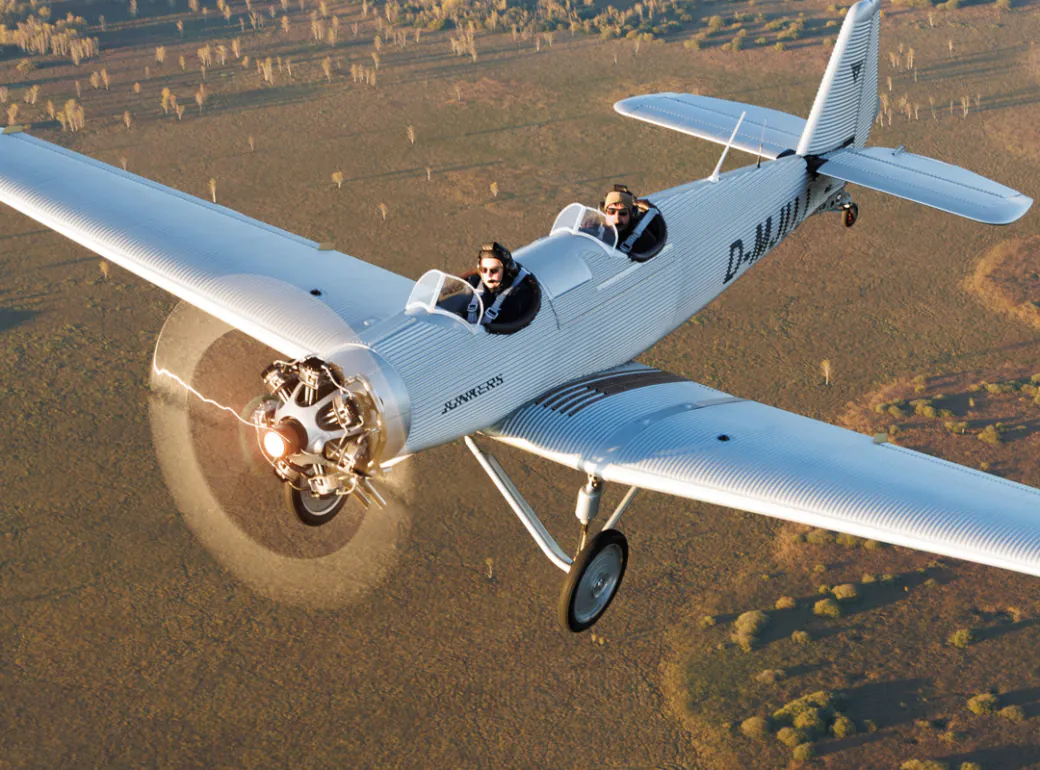
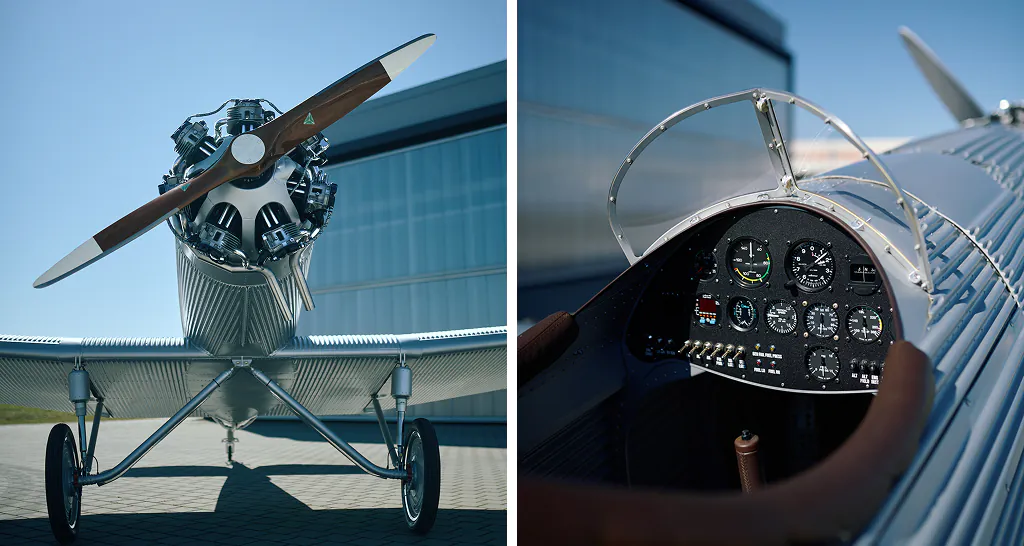
Some aircraft are not created on the drawing board, but from a visionary idea. After the introduction of the Junkers A50 Junior, we received an increasing number of enquiries from customers who wanted something even closer to the historical original: analogue instruments, a classic radial engine and a flying experience reminiscent of aviation in the 1920s.
With the A50 Heritage, we have taken up this desire and designed an aircraft that not only references history, but also brings it back to life. The characteristic sound of the radial engine, the appearance and the immediate flying experience appeal above all to purists and engine enthusiasts. At the same time, the A50 Heritage opens up the opportunity for us to reach a broader target group and tap into new markets.
Fidelity to the original as a technical challenge
Historical accuracy was a key requirement from the outset. The airframe and the materials used largely correspond to the historical model from 1929. However, we were unable to draw on existing knowledge and instead had to essentially relearn the construction methods used around 100 years ago.

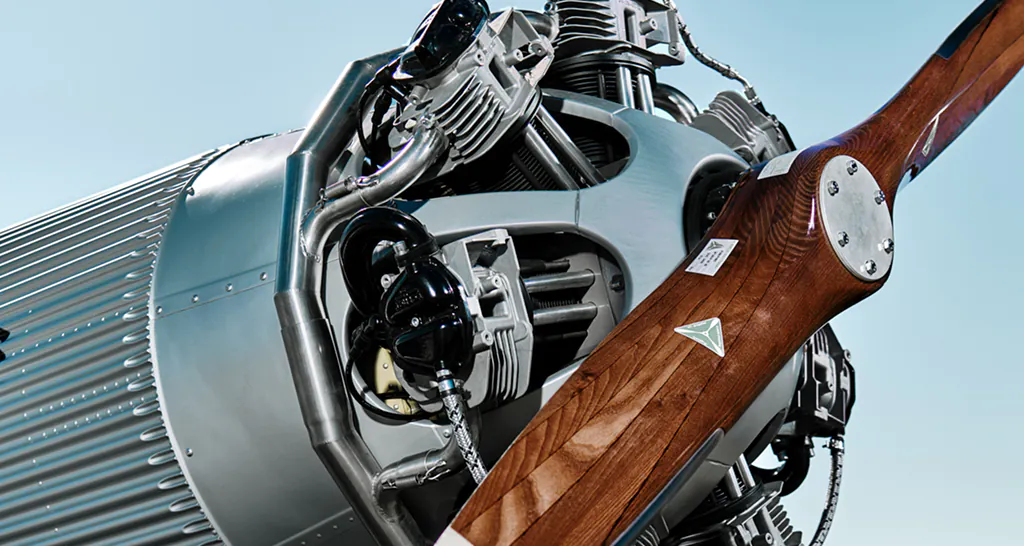
One of the biggest technical challenges was the drive system. While the original was equipped with a five-cylinder radial engine, the A50 Heritage now uses a seven-cylinder radial engine. Keeping the additional weight of this engine below the legal limit of 600 kilograms required intensive development work and consistent weight optimisation.
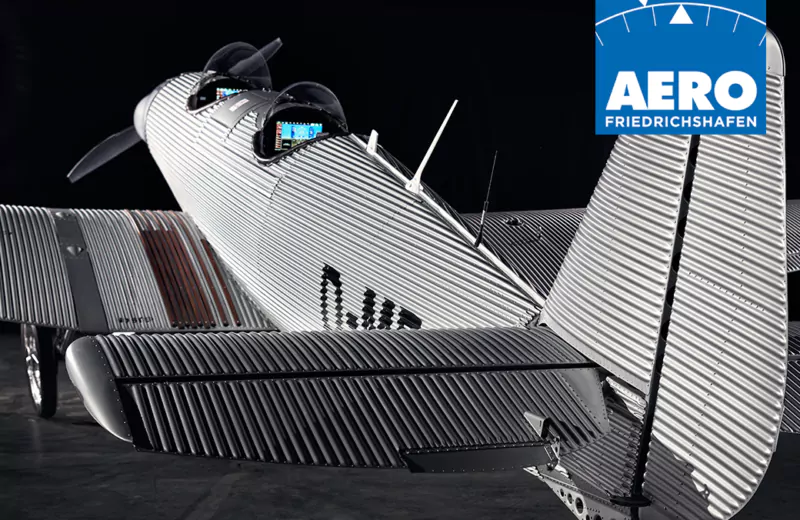
The review and evaluation of the historical plans and the implementation of the characteristic corrugated sheet metal structure were particularly time-consuming. There are no industrially available press moulds for the approximately 1,400 different components. These had to be specially developed and manufactured – a process that required both precision craftsmanship and a deep understanding of the original design.
Safety, approval and modern reality
As close as we wanted to get to the historical original, an aircraft that is certified today must meet today’s safety requirements. This is precisely where the challenge of combining tradition and modernity becomes apparent.
As an ultralight aircraft, the Junkers A50 Heritage is subject to different specifications than a classic Echo class aircraft. Certification is generally less complex, but comes with clear requirements. These include a mandatory rescue system, which weighs around eight kilograms on its own. Components such as brakes and landing gear also had to be modernised, even though these did not exist in their original form 100 years ago.
From prototype to series production
The path to traffic approval for the Junkers A50 Heritage was a multi-stage process. It began with a clear vision of the aircraft that was to be created – one that did not yet exist on the market in this form. Based on historical documents, sketches were drawn up, components were revised and the first models were built.
This was followed by full-scale prototypes, digital simulations, wind tunnel tests and numerous adjustment loops. Each development step was documented and accompanied by external partners such as Kasaero. Flight tests finally marked the end of this intensive phase.
All relevant evidence and documentation was submitted to the German Ultralight Flying Association (DULV). With final approval, the way was clear for series production. If there had not been a positive outcome at this point, individual tests would have had to be carried out again – a process that underlines the high importance of certification.
A new chapter for Junkers Aircraft
The maiden flight of the Junkers A50 Heritage on 3 August 2024 in Aalen-Elchingen was a special moment for the entire team. The aircraft took off for the first time in front of invited guests and members of the press – a moment in which months of development work became visible and audible. With the A50 Heritage’s traffic certification, we have not only added another aircraft to our portfolio. Strategically, the Heritage opens up access to new target groups, especially in the USA, where interest in classic aircraft and authentic aviation history is particularly high.
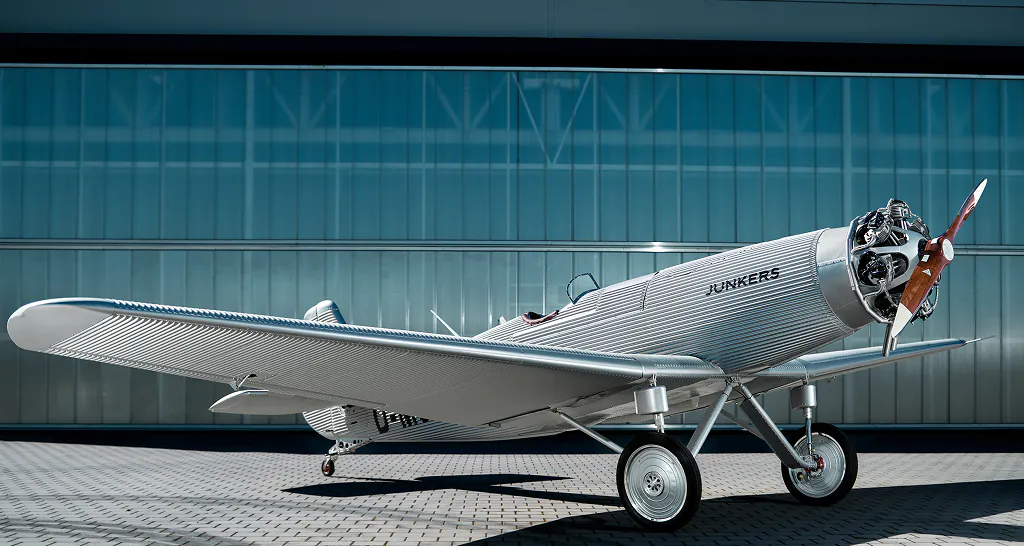
The Junkers A50 Heritage represents what drives us: engineering excellence, respect for history and the aspiration to carry the past into the future – not as a museum piece, but as a flying reality.