Ultralight flying is a timeless adventure in the tradition of the early aviation pioneers. Winter flying holds a special fascination: visibility is often excellent, the landscape frequently appears as a breathtaking winter wonderland, and the dense cold air provides engines with ideal conditions for peak performance. However, flying in winter also presents certain challenges. In this blog post, we explain what pilots should pay attention to before taking off with their ultralight aircraft in winter and what to keep in mind while in the air.
Typical Challenges of Flying in Winter
Ice and Snow on the Aircraft
Even a thin layer of frost can affect the flight characteristics of ultralight aircraft. Therefore, the rule is: before every takeoff, pilots must thoroughly check their aircraft for ice and snow and de-ice it if necessary. How this can be done is explained later in this article.
Icing in Flight
Ultralight aircraft usually do not have their own de-icing systems. This means that pilots must also watch for ice formation while in the air. Moist air masses such as fog are particularly prone to icing, but even relatively low humidity can be enough to cause ice formation. If ice is detected—whether through visual inspection, initial functional impairment, or sensors—the pilot must immediately leave the moist air mass and land at a suitable location.
Carburetor Icing
While engines benefit from the cold, dense air during winter flying, the carburetor can still ice up in humid conditions—even at outside temperatures as high as +15°C. Signs include rough engine running, a drop in RPM, or loss of power without any obvious cause. Tip: regularly apply carburetor heat (if available), especially when flying in cold, humid air.
Choosing the Right Weather for Winter Flights
The best strategy is to wait for the right weather conditions for winter flying. High-pressure systems are particularly recommended. They often provide excellent flying conditions with clear visibility and a low risk of icing. Low-pressure systems, on the other hand, can change quickly—even when the weather initially appears stable—and may bring cold, moisture, or in the worst case snow and storms. For safe winter flying, checking the weather report beforehand is therefore essential.
Light Conditions in Winter
The sun remains low in the sky and sets early, which creates two particular challenges for ultralight flying. First, visibility conditions can be more difficult. Pilots should therefore approach their first winter flights gradually to get used to these conditions. Second, the shorter daylight hours mean that flight times must be calculated especially carefully. Not only are night flights prohibited for ultralight aircraft, but flying during dusk or at night can also become very dangerous. Pilots should therefore always plan sufficient time reserves for winter flights.
Runway and Ground Conditions
Unlike in summer, it cannot be assumed that runways are free of snow or ice. At smaller airfields in particular, taxiways and grass runways are often only partially cleared. As a result, braking effectiveness drops significantly, and the aircraft may easily slide during takeoff or landing. Tip: before the flight, always check the conditions at the destination airfield.
Human Factors and Cold
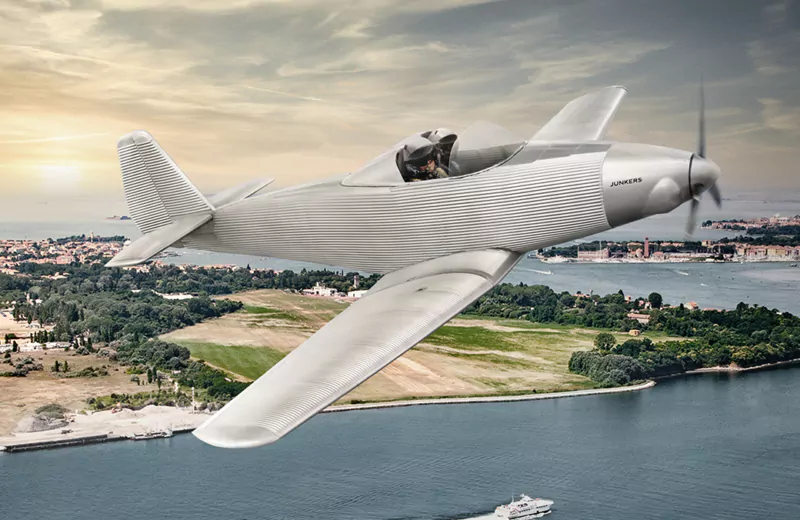
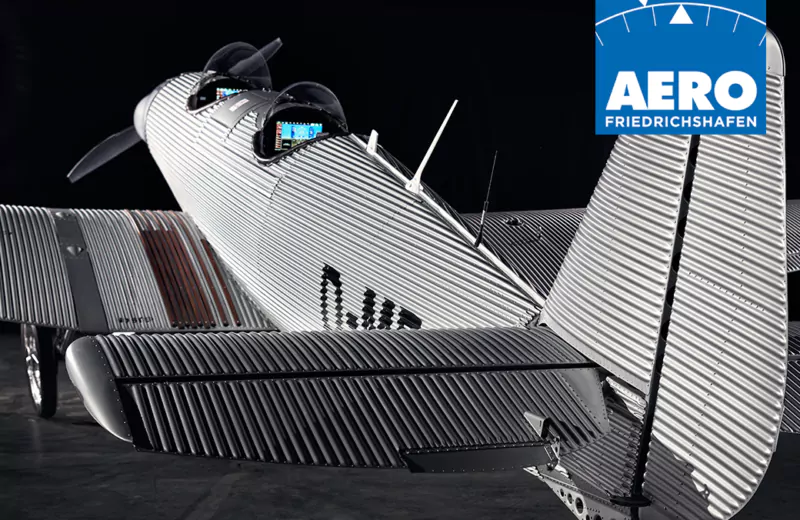
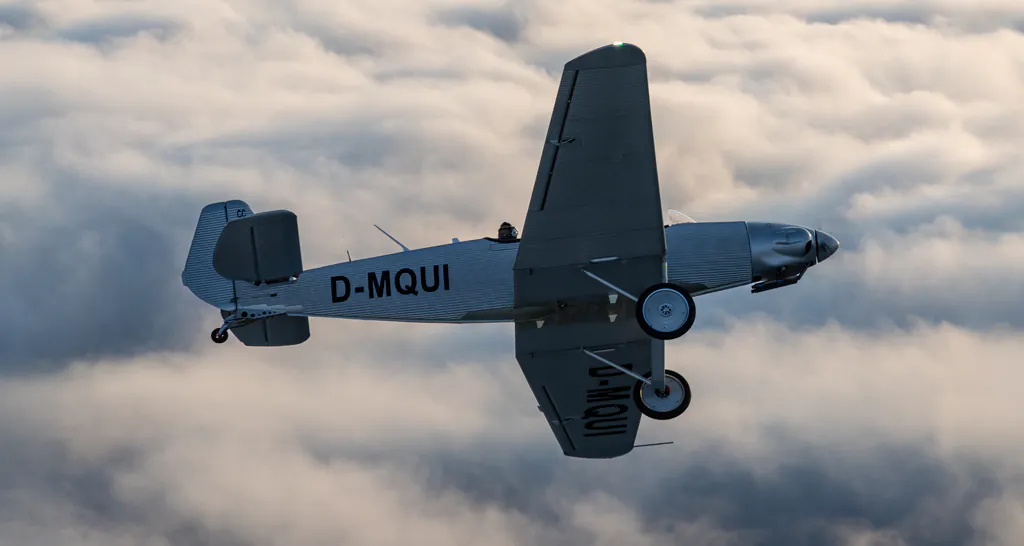
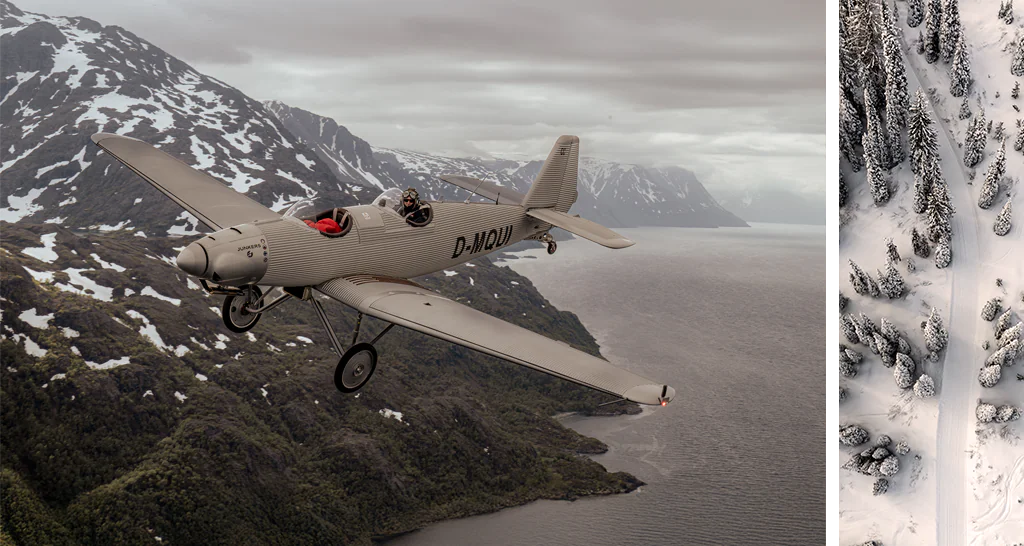
Ultralight flying stands for freedom. Unlike larger private aircraft, pilots deliberately embrace minimalism and experience flying in its most authentic form. However, flights with an open cockpit—such as with our ultralight aircraft Junkers A50 Junior, the A50 Heritage, or the Junkers A60 RG—are not recommended in winter. It is simply too cold. The enclosed canopy of the Junkers A60, on the other hand, provides sufficient protection and insulation for more moderate temperatures. Nevertheless, pilots should prepare for the cold with appropriate clothing, such as a thermal suit or multiple layered clothing. Good gloves and a balaclava can also be useful.
In addition, an emergency kit with warm clothing, a blanket, and food should always be on board in case of an unplanned landing.
Preparing Ultralight Aircraft for Winter Flying
Careful preparation is especially important in winter to adapt the aircraft to the seasonal conditions. Here are the most important measures for maintenance and the pre-flight check:
Allow More Time
Winter flights require more preparation time. Engine preheating, de-icing, and shorter daylight hours make it advisable to arrive at the airfield early. Unexpected delays should also be taken into account.
Preheat Engine and Systems
At temperatures below 0 °C, preheating the engine is recommended, for example with heating mats, hot air, or a stationary heater. This improves starting behavior, lubrication, and reduces wear. The gearbox oil and cooling system also benefit from warming up.
Battery Care
Cold temperatures reduce battery performance. If the aircraft will remain unused for a longer period, remove the battery so it can be stored in a warm place and maintained with a trickle charger.
Careful Pre-Flight Inspection
Winter procedures must not interfere with the normal checklist routine. Icing on wings, control surfaces, or sensors must be ruled out. The pitot tube and static port must be clear and dry.
De-Icing Your Aircraft – How to Do It Properly
Thorough de-icing is mandatory before every winter takeoff. Even a thin layer of frost can disrupt aerodynamics and compromise flight safety. The entire wing surface and tail assembly must therefore be completely free of ice before takeoff — safety comes first.
What is used to de-ice aircraft in winter?
In aviation, heated de-icing fluids based on water and glycol are used (Types I–IV). For smaller aircraft and ultralights, thinner Type III products or special spray solutions are often used.
How to de-ice your ultralight aircraft:
Ultralight aircraft are usually de-iced manually — using soft brooms, cloths, or suitable spray solutions. Automotive de-icing products are problematic because they can damage plastic components. Ideally, store your ultralight aircraft in a heated hangar or use the early morning sun to allow iced areas to thaw naturally.
Additional anti-icing measures:
After de-icing, you should take off promptly. The reason: specialized anti-icing fluids are rarely available for ultralight aircraft. The colder and more humid the air is in winter, the faster new frost can form. Therefore, always pay close attention to the weather conditions, as an aircraft that has been de-iced on the ground can quickly freeze again.
Costs and environmental considerations:
De-icing agents must be disposed of properly. For ultralight aircraft, only a few liters are usually required, making the process significantly cheaper and simpler than for large aircraft.
Some Tips for a Safe Winter Flight
First of all: the requirements for flying in winter are diverse and cannot be generalized, as they also depend on the pilot’s individual flying skills, their experience, and the specific conditions of the day. Nevertheless, we would like to share a few tips that can positively influence the typical course of a winter flight.

Takeoff
Caution is already required on the runway: taxi slowly, steer smoothly, and avoid heavy braking — otherwise your ultralight aircraft may skid on snow or ice. This is especially important in crosswinds: steer carefully and, if necessary, take a slightly longer route. On snow-covered runways, try to choose an even surface for both wheels to avoid asymmetric resistance. During takeoff, the ground roll may also increase by up to 50 percent depending on the type of snow.

Flight Operations and Navigation
Only begin your winter flight in stable weather conditions and regularly check your ultralight aircraft for icing. This can be done through visual inspection or, if available, by monitoring the aircraft’s sensors. You should also pay close attention to the engine operating parameters: maintain sufficient power to keep engine temperatures stable, especially before starting a descent. For carbureted engines, activate carburetor heat briefly and regularly — ice can form in the system even without obvious symptoms.

Landing
Prepare carefully for landing: find out early about the runway conditions at your destination airfield — snow, ice, or poor braking performance can be critical. If in doubt, it is better to divert to a well-cleared airfield.
During the approach, choose a slightly higher airspeed if turbulence or wind shear is expected. Touch down as gently as possible on snow and avoid heavy braking. Landings on snow-covered runways should be performed as straight as possible with symmetrical touchdown. If the snow is too deep or the conditions appear uncertain, it is safer to abort the landing approach in good time.
Do you have questions about winter flying with ultralight aircraft?
If you are planning a winter flight with your Junkers aircraft, feel free to contact us if you have any specific questions about the topic.